Introduction
Almost every menstruating person has heard some version of the same message: "period pain is just part of being a woman." It's whispered in school hallways, echoed by well-meaning relatives, and sometimes even repeated by doctors. But is that actually true? Is period pain always normal, or can it be a sign that something else is going on?
The honest, evidence-based answer is: some pain is common, but not all pain is normal, and the difference matters. Research shows that painful periods, medically called dysmenorrhea, affect a striking number of people of reproductive age, with global prevalence estimates ranging widely depending on the population studied (Kural et al., 2015). Understanding where "common" ends and "concerning" begins can help you know when to simply reach for a heating pad, and when to see a doctor.
What Exactly Is Dysmenorrhea?
Dysmenorrhea is the clinical term for painful menstrual cramps, and it comes in two distinct types:
-
Primary dysmenorrhea refers to cramping pain that occurs before or during menstruation without any underlying pelvic disease. It's caused by natural spikes in prostaglandins, hormone-like compounds that trigger the uterine muscle to contract so the uterine lining can shed (Kural et al., 2015).
-
Secondary dysmenorrhea refers to period pain that is caused by an identifiable underlying condition, such as endometriosis, adenomyosis, uterine fibroids, or pelvic inflammatory disease (Carlson, Nagy and Khan, 2026).
This distinction is at the heart of the question "is period pain always normal?" Primary dysmenorrhea, in a mild-to-moderate form, is considered a normal physiological experience. Secondary dysmenorrhea is not something to simply endure, it's a medical condition that needs diagnosis and treatment.
How Common Is Period Pain, Really?
If you've ever felt like your cramps were more intense than everyone else seemed to admit, the data suggests you're far from alone. A large meta-analysis pooling data from 96 studies and more than 78,000 students found that the overall prevalence of primary dysmenorrhea was 66.1%, with roughly a third of those affected reporting moderate-to-severe pain (Wang et al., 2022). A separate cross-sectional study of young women similarly found a high prevalence of painful periods, with more than a third of participants rating their pain as severe on a visual analogue scale (Kural et al., 2015).
In other words, painful periods are the norm rather than the exception, which is exactly why so many people are told to "just deal with it." But common does not mean pain should be ignored, especially when it's severe, escalating, or disrupting daily life.
When Period Pain Crosses the Line
So how do you know if your cramps are "textbook normal" or a signal worth investigating? A few patterns are worth paying attention to:
1. Pain that doesn't respond to standard treatment. Mild-to-moderate primary dysmenorrhea usually improves with over-the-counter anti-inflammatory medication, heat, and rest. Pain that persists despite these measures is a red flag.
2. Pain that worsens over time. Primary dysmenorrhea often becomes milder with age or after childbirth. Cramps that steadily intensify year after year point toward a possible underlying cause rather than typical hormonal cramping.
3. Pain outside the "normal window." Primary dysmenorrhea classically lasts one to three days around the start of a period. Pain that starts well before bleeding, continues well after it ends, or occurs at other points in the cycle (such as during ovulation or sex) deserves evaluation.
4. Additional symptoms alongside the pain. Heavy bleeding, bleeding between periods, pain during intercourse, bowel or bladder symptoms that flare with menstruation, and unexplained fatigue can all point toward secondary causes such as endometriosis or adenomyosis.
5. Pain that interferes with daily life. Missing school, work, or social activities every single cycle is not something to normalize, regardless of the underlying cause.
The Endometriosis Problem: Why "Normal" Pain Gets Dangerous
Perhaps the most important reason to question the "periods are just supposed to hurt" narrative is endometriosis, a condition in which tissue similar to the uterine lining grows outside the uterus, causing inflammation, scarring, and often severe pain.
The problem is that endometriosis is frequently mistaken for ordinary period pain, sometimes for years. Clinical case reviews describe patients whose disabling cramps, which began at menarche, were repeatedly diagnosed as simple "bad periods" and managed with pain relievers and hormonal contraceptives with little success, a pattern that delays proper diagnosis and treatment (Panvino et al., 2025). This diagnostic delay is well documented: symptom heterogeneity, the lack of a simple, non-invasive test, and low awareness among both patients and clinicians all contribute to endometriosis frequently going unrecognized for years after symptoms begin (Panvino et al., 2025).
Part of the issue is cultural, not just clinical. Because menstrual pain is so widely accepted as inevitable, both patients and healthcare providers can be slow to consider that "bad cramps" might actually be a treatable disease rather than a normal rite of passage. This normalization of pain, combined with social taboos around discussing menstruation, has been identified as a genuine barrier to timely diagnosis (Panvino et al., 2025).
The takeaway isn't to panic, most period pain really is primary dysmenorrhea. But it is a strong argument for not automatically dismissing severe or unusual pain as "just periods."
What Actually Helps
For pain confirmed (or reasonably assumed) to be primary dysmenorrhea, several evidence-informed strategies can help:
-
NSAIDs (nonsteroidal anti-inflammatory drugs), such as ibuprofen or mefenamic acid, work by reducing prostaglandin production and are considered a first-line treatment.
-
Heat therapy applied to the lower abdomen can relax uterine muscles and ease cramping.
-
Regular physical activity has been associated with a lower likelihood of dysmenorrhea in several studies of young women.
-
Adequate sleep and stress management may also play a protective role, as poor sleep and high stress have both been linked to more frequent and severe menstrual pain.
-
Hormonal contraceptives can reduce prostaglandin levels and menstrual flow, easing pain for many people, though they should be discussed with a healthcare provider.
-
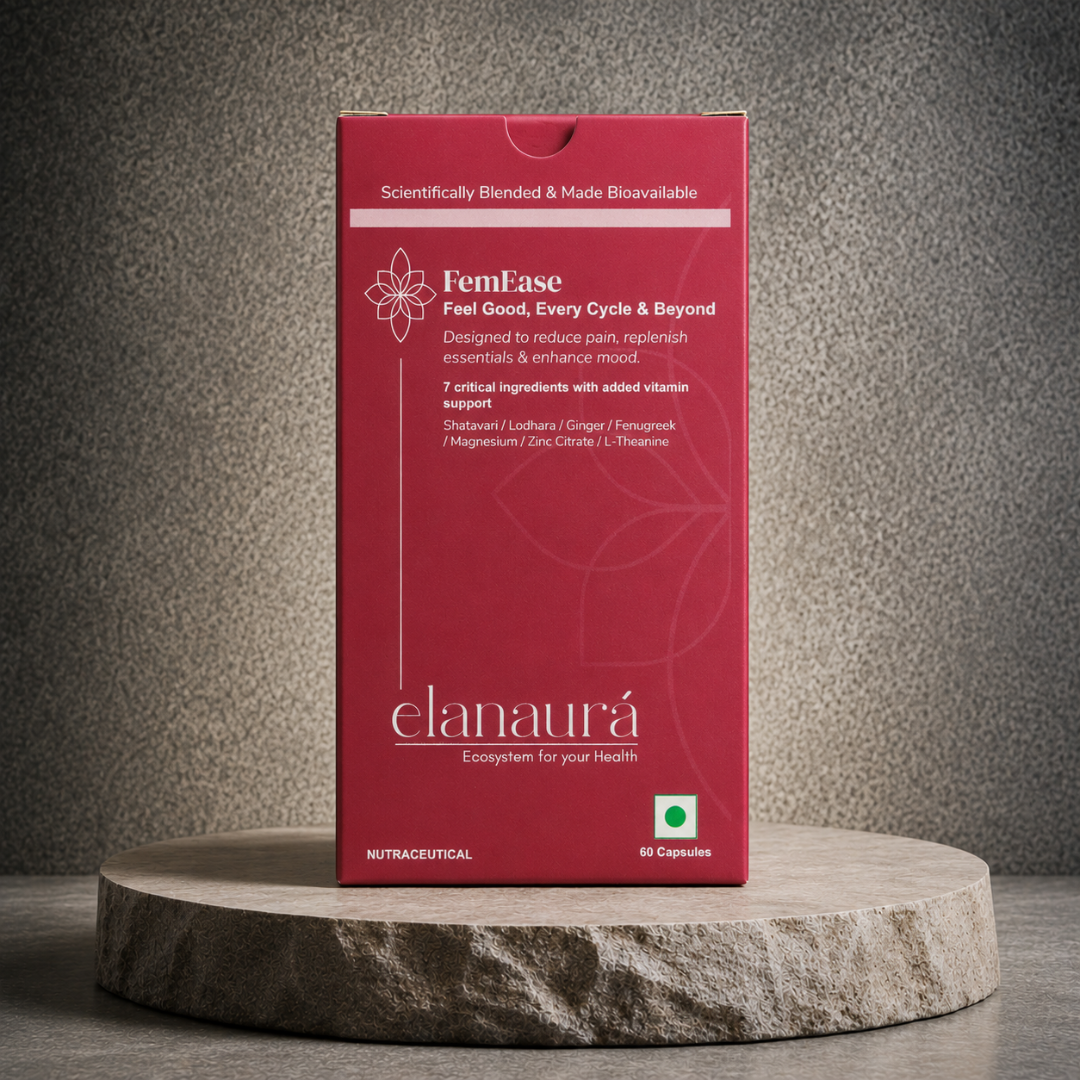
Targeted period pain relief supplements, formulated with ingredients like magnesium, ginger, or shatavari, are increasingly used alongside these approaches to support the body through the menstrual cycle and take the edge off cramping; a helpful option for those looking for a non-hormonal, everyday addition to their routine.
If these measures don't meaningfully reduce your pain, that's not a personal failure, it's useful clinical information that your pain may need further investigation.
When to See a Doctor
Consider booking a medical appointment if you experience:
-
Pain that isn't relieved by standard over-the-counter medication
-
Pain that is getting worse over months or years
-
Cramping that starts well before your period or lingers after it ends
-
Heavy bleeding, large clots, or bleeding between periods
-
Pain during sex, bowel movements, or urination that's linked to your cycle
-
Any period pain severe enough to regularly keep you from school, work, or normal activities
Bringing a symptom diary, noting when pain starts, how long it lasts, its severity, and any related symptoms; can make these conversations far more productive.
The Bottom Line
Is period pain always normal? Not entirely. Mild-to-moderate cramping around your period is extremely common and, for most people, a normal part of the menstrual cycle driven by prostaglandins. But pain that is severe, escalating, poorly responsive to treatment, or accompanied by other symptoms is not something you should simply push through. Recognizing that distinction and advocating for further evaluation when something feels off, is one of the most important things you can do for your long-term reproductive health.
References
Carlson, K., Nagy, H. and Khan, M.A.B., 2026. Dysmenorrhea. In: StatPearls. Treasure Island (FL): StatPearls Publishing. Available at: https://www.ncbi.nlm.nih.gov/books/NBK560834/.
Kural, M., Noor, N.N., Pandit, D., Joshi, T. and Patil, A., 2015. Menstrual characteristics and prevalence of dysmenorrhea in college going girls. Journal of Family Medicine and Primary Care, 4(3), pp.426–431. Available at: https://doi.org/10.4103/2249-4863.161345.
Panvino, F., Paparella, R., Pisani, F., Tarani, F., Ferraguti, G., Fiore, M., Ardizzone, I. and Tarani, L., 2025. Endometriosis in adolescence: a narrative review of the psychological and clinical implications. Diagnostics, 15(5), p.548. Available at: https://doi.org/10.3390/diagnostics15050548
Wang, L., Yan, Y., Qiu, H., Xu, D., Zhu, J., Liu, J. and Li, H., 2022. Prevalence and risk factors of primary dysmenorrhea in students: a meta-analysis. Value in Health, 25(10), pp.1678–1684. Available at: https://doi.org/10.1016/j.jval.2022.03.023.